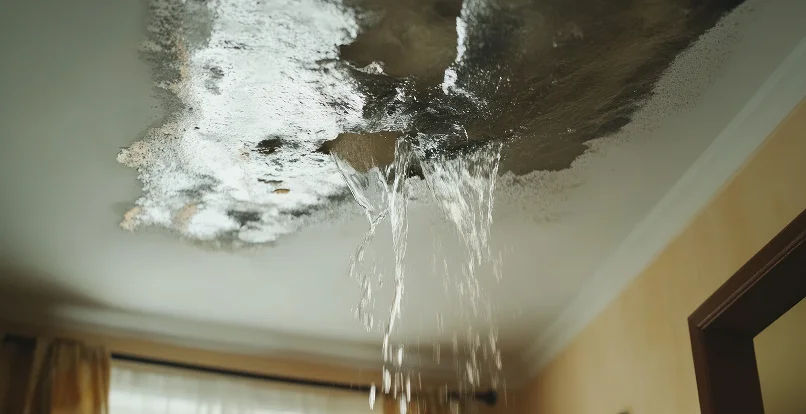


After water damage, mold can begin growing within 24 to 48 hours. Subtropical humidity makes mold growth faster and more aggressive than in most US cities. This guide shows you exactly how to prevent mold from taking hold, what warning signs to watch for, and when you need professional mold remediation Miami specialists.
After water damage in Miami, mold can begin growing within 24 to 48 hours. Miami’s subtropical humidity makes mold growth faster and more aggressive than in most US cities. This guide shows you exactly how to prevent mold from taking hold, what warning signs to watch for, and when you need professional mold remediation Miami specialists.
Key Takeaways
- Mold can start forming in as little as 24 hours after water damage in humid climate
- The first 48 hours are your window to prevent mold without professional remediation
- Dehumidifiers are more effective than fans alone in high-humidity environment
- Surface dryness doesn’t mean structural dryness – check inside walls and under floors
- Black mold and large mold colonies always require professional mold removal Miami treatment
- Mold prevention is far cheaper than mold remediation — act fast and don’t assume it’ll dry itself
Why Does Miami’s Climate Make Mold Worse After Flooding?
Average relative humidity sits between 70% and 90% year-round, which is nearly ideal for mold growth. Most US cities give homeowners 48 to 72 hours after water damage before mold becomes a serious risk.
Mold spores are already present in air at higher concentrations than in drier climates. They don’t need to travel far or wait long once moisture creates the right environment. After flooding, your home’s walls, floors, and ceilings become a perfect breeding ground for mold growth after flooding if they aren’t dried aggressively and quickly.
According to the CDC, mold grows best at temperatures between 77 degrees F and 86 degrees F, which describes almost every day of the year in this city. That’s why standard drying advice written for homes in drier climates doesn’t apply here. Homeowners need a more aggressive approach.
Read More About: What To Do After Water Damage at Home As A Homeowner?
The Critical 24-48 Hour Window You Can’t Afford to Miss
The 24 to 48 hours after water damage is your prevention window. If you can get your home dried down to below 50% relative humidity within this timeframe, you dramatically reduce the likelihood of mold taking hold. Every hour past the 48-hour mark that moisture remains in structural materials increases the mold risk.
This window isn’t just about visible wet surfaces. It’s about what’s inside your walls, under your flooring, and above your ceiling tiles. Mold growth after flooding almost always starts in these hidden areas, not on the surfaces you can see. That’s why surface-only drying efforts often fail.
Here’s what you need to do inside the first 24 to 48 hours to protect your home from mold.
Step 1: Remove Standing Water Within Hours
Every gallon of standing water you remove cuts drying time significantly. Use a wet/dry vacuum, mop, squeegee, or pump to extract as much water as physically possible before you start drying. Don’t wait until you have equipment. Start removing water now with whatever you have.
Step 2: Run Dehumidifiers in Every Affected Room
Standard box fans move air but they don’t remove moisture. You need dehumidifiers to pull humidity out of the room. Industrial dehumidifiers, which you can rent from home improvement stores, are significantly more effective than residential units in baseline humidity. Set them to maintain 50% or lower relative humidity.
Step 3: Open Windows Only When Outdoor Humidity Is Lower
Don’t automatically open windows after a flood. Check the current outdoor humidity before opening anything. If outdoor humidity is above 60%, opening windows brings more moisture in, not less. Use a simple hygrometer app or weather station to check before you ventilate.
Step 4: Pull Up Wet Carpets and Flooring
Wet carpet is one of the fastest mold incubators in any home. If your carpet got wet, it needs to come up within hours and not tomorrow. Wet carpet padding is almost always unsalvageable. Pull it up, get it outside, and treat the subfloor below before you worry about replacement.
Step 5: Treat Exposed Surfaces With Antimicrobial Solution
Once you’ve removed standing water and pulled up wet materials, apply an EPA-registered antimicrobial spray to all exposed surfaces. This doesn’t prevent mold if moisture remains, but it reduces spore colonization on surfaces that you’ve already dried. Focus on drywall, subfloor, framing, and concrete.
| Think You Already Have Mold? Don’t Wait. Visible mold after water damage needs professional treatment right away. GuardPro’s certified mold remediation team will assess, contain, and remove mold safely before it spreads. Get a Free Mold Assessment! |
How Do You Dry Your Home to Prevent Mold Growth?
You dry your home effectively by combining water extraction, dehumidification, and air circulation in the right sequence. Drying requires more aggressive equipment than most other cities because you’re fighting both the moisture from the damage and the ambient humidity in the air.
Professional mold remediation Miami teams use industrial drying equipment with output many times greater than what you can rent from a hardware store. They also use moisture meters to track drying progress inside walls without cutting into them, so they can confirm when the structure is truly dry, not just surface dry.
If you’re handling the drying yourself, you’ll need to physically check moisture levels every 12 hours. Continue until all readings are at or below 15% for wood and 0.5% WME for concrete. Without a moisture meter, you’re essentially guessing wrong means mold.
Read More About: How Do You Recover From Fire Damage the Right Way?
What Are the Early Warning Signs of Mold After Water Damage?
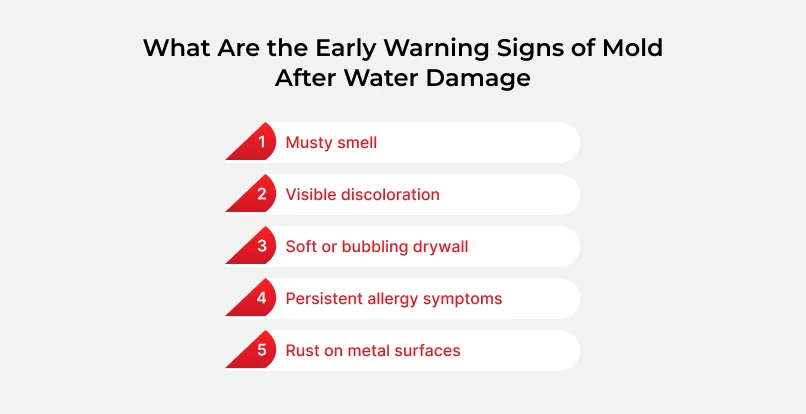
Mold often grows in places you can’t immediately see, but it always leaves signs you can detect if you know what to look for. Catching mold early means a smaller, less expensive remediation job and far less health risk for your family.
Musty smell
The first sign of mold is almost always smell before sight. A damp, earthy, musty odor that wasn’t there before means mold is growing somewhere, even if you can’t see it.
Visible discoloration
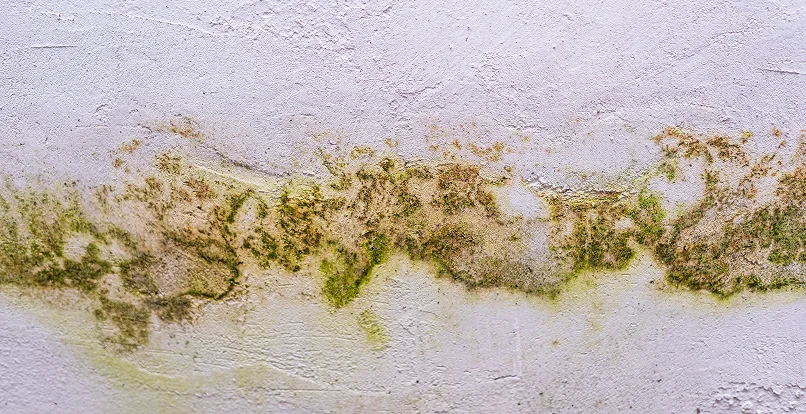
Black, green, gray, or white spots on walls, ceilings, or floors that appeared after water damage are almost certainly mold. Don’t wipe and ignore them.
Soft or bubbling drywall
Drywall that feels soft, spongy, or has paint bubbling off contains trapped moisture and is actively growing mold inside the wall cavity.
Persistent allergy symptoms
If your family is sneezing, coughing, or experiencing eye irritation inside the home after water damage, mold spores in the air are the likely cause.
Rust on metal surfaces
If metal surfaces like pipes or brackets near the water damage are rusting faster than normal, humidity levels in the area are dangerously high for mold growth.
If you’re seeing any of these signs more than 3 days after water damage, call a professional mold removal Miami specialist immediately. What starts as a small colony can cover a wall cavity within a week in this humid climate.
| Spots, Smell, or Sneezing? Get a Free Mold Inspection GuardPro Restoration’s certified inspectors use moisture meters and air sampling to find mold you can’t see. Don’t wait until it spreads. Book Your Free Inspection! |
Long-Term Mold Prevention Tips for Miami Homeowners
Preventing mold after water damage isn’t just about the first week. Ongoing humidity means you need to manage moisture in your home year-round, especially in areas that were previously water damaged. Even after remediation, previously affected areas are more vulnerable.
Keep indoor humidity below 50%
Run your air conditioning consistently, even in winter months. The AC system is your primary mold prevention tool year-round.
Install a whole-home dehumidifier
If your home floods more than once, or if you live in a low-lying neighborhood, a whole-home dehumidifier is one of the best investments you can make.
Inspect your roof and plumbing annually
Most serious water damage in homes comes from roof leaks and plumbing failures. An annual inspection catches problems before they become floods.
Use mold-resistant drywall in wet areas
When you’re replacing materials after water damage, upgrade to mold-resistant drywall and moisture-barrier paint in bathrooms, laundry rooms, and any previously flooded area.
Don’t store items on the floor in vulnerable areas
Cardboard boxes, fabric items, and organic materials stored on concrete floors in garages or utility rooms are prime mold candidates during the rainy season.
If your home had water damage restoration done, make sure the restoration team confirmed full structural dryness before closing up walls. Professional mold remediation should always be followed by a clearance test, also called post-remediation verification, to confirm that mold levels are back to normal before you close up the walls. Ask your contractor for this test in writing. GuardPro assists property owners with post-remediation documentation and coordination throughout the recovery process.
| Miami’s Humidity Doesn’t Wait — Neither Should You Whether you need emergency mold prevention or full mold remediation, GuardPro Restoration’s team is certified, licensed, and available 24/7. Contact GuardPro Restoration Today! |
Conclusion
Mold doesn’t give you a grace period. The combination of year-round heat, humidity that rarely drops below 70%, and the speed at which water travels into hidden structural cavities means that every hour you delay is an hour mold is getting established in your home. The steps in this guide are designed to help you act fast enough to prevent that.
If you’ve passed the 48-hour mark and you’re still dealing with moisture, or if you’re already seeing spots, smell, or allergy symptoms, don’t try to manage it yourself. GuardPRO provides mold mitigation support and coordinates qualified remediation professionals, available 24/7 to help property owners address mold issues before they spread further. Contact us now for a free assessment.