

Filing an insurance claim after water or fire damage doesn’t have to be overwhelming. Most homeowners leave money on the table because they don’t document correctly or don’t understand how the adjuster process works. This guide walks you through every step, from the moment damage occurs to the point where restoration services begin.
Key Takeaways
- Document all damage with photos and video before you remove or repair anything
- Call your insurance company within 24 hours of discovering damage – delays can affect your claim
- Water damage from burst pipes is usually covered; flood damage from storms requires separate flood insurance
- Fire and smoke damage is covered under most standard homeowner policies in Florida
- A licensed contractor’s written estimate carries significant weight with your insurance adjuster
- You have the right to dispute a low adjuster estimate using your own contractor’s documentation
Does Homeowner Insurance Cover Water and Fire Damage?
Standard homeowner insurance in Florida covers sudden and accidental water damage (like burst pipes, appliance leaks, or roof leaks from storm wind damage) and fire damage from most causes. It doesn’t cover gradual leaks you should have noticed, flooding from rising water, or damage from neglected maintenance.
Fire damage is generally the most straightforward claim type. If a fire damages your home, virtually all of the fire, smoke, and water damage from firefighting efforts is covered under a standard HO-3 policy. That’s why fire damage restoration Miami homeowners need to call their insurer immediately, not wait until the restoration is complete.
Water damage is more nuanced. The source of the water determines whether you’re covered. Sudden pipe burst? Covered. Flooding from hurricane storm surge or overflowing rivers? That requires a separate National Flood Insurance Program (NFIP) or private flood policy, which is strongly recommended for homeowners given the city’s flood risk.
Read More About: What To Do After Water Damage at Home As A Homeowner?
How To Document Your Damage Before Filing a Claim
Documentation is everything in an insurance claim. The more thorough your evidence, the harder it is for an insurer to dispute the scope of damage. You should treat this step like building a legal case because, if your claim gets disputed, that’s essentially what it becomes.
Take photos and video of every room before anything is touched
Walk through the entire affected area. Capture water lines, burn marks, smoke staining, damaged materials, and every piece of personal property that was damaged.
Document serial numbers and model numbers of damaged appliances
Take photos of appliance labels before they’re disposed of. Your claim for a damaged washer or HVAC unit will be much stronger with this data.
Keep all damaged items until the adjuster visits
Don’t throw away damaged carpet, furniture, or appliances until after the adjuster has documented them. Disposing of evidence before the inspection can reduce your claim.
Create a written inventory
List every damaged item with estimated value and purchase date. The more specific you are, the harder it is for the insurer to low-ball the replacement cost.
Get a licensed contractor’s written estimate early
A written estimate from a certified fire damage restoration Miami or water damage restoration company is one of the most powerful documents in your claim file.
According to the Florida Department of Financial Services, policyholders who submit thorough documentation receive higher initial claim settlements than those who rely solely on insurer estimates. Your documentation is your negotiating tool.
| Need a Restoration Estimate for Your Insurance Claim? GuardPro Restoration provides detailed written estimates accepted by all major Florida insurers. We’ll document everything so your claim is as strong as possible. Get Your Free Estimate! |
What Are the Steps To File a Property Damage Claim?
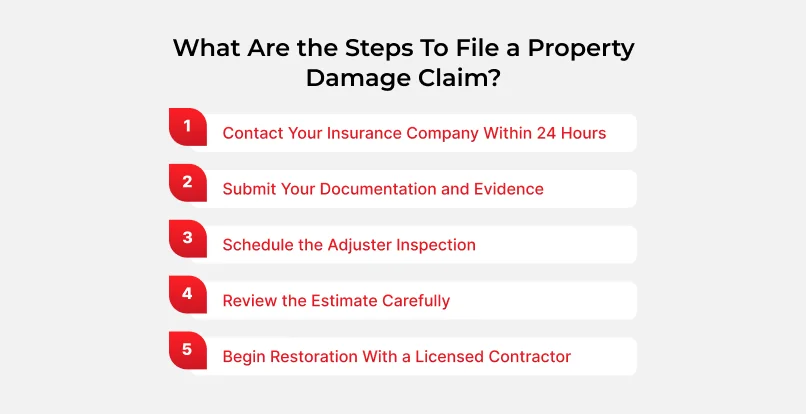
Filing your claim correctly from the start prevents delays, disputes, and underpayment. Here’s the exact process to follow for water damage insurance claim Miami submissions or fire damage claims.
Step 1: Contact Your Insurance Company Within 24 Hours
Call your insurer’s claims line immediately after securing the property and documenting the damage. Most policies require prompt notification, and delays can give the insurer grounds to dispute claim validity. Have your policy number ready, and note the name and ID number of every person you speak to.
Step 2: Submit Your Documentation and Evidence
Upload or mail your full photo and video documentation, damaged item inventory, and any receipts or records you have for high-value items. Submit everything at once rather than sending piecemeal documents, which can slow processing and create inconsistencies in your claim record.
Step 3: Schedule the Adjuster Inspection
The insurance company will assign an adjuster to inspect your property. Schedule this inspection as soon as possible, but don’t let urgency rush your documentation preparation. You want everything ready before the adjuster arrives. You have the right to have your own contractor present during the adjuster’s inspection.
Step 4: Review the Estimate Carefully
The adjuster will produce a scope of loss document and cost estimate. Review every line item. Compare it against your contractor’s estimate. If the adjuster’s estimate is lower, you don’t have to accept it. Request a line-by-line explanation for any discrepancy and submit your contractor’s competing estimate as a formal supplement.
Step 5: Begin Restoration With a Licensed Contractor
Once your claim is approved and the scope of work is agreed upon, begin restoration immediately. In Miami, delays in starting restoration after water damage create secondary damage like mold remediation Miami costs that your insurer may argue aren’t covered if you waited too long. Qualified restoration professionals can help document project completion for final payment release, while GuardPro assists property owners throughout the process.
Read More About: What Stops Mold From Growing After Water Damage at Home?
How Do You Work With an Insurance Adjuster in Miami?
An insurance adjuster works for your insurance company, not for you. Their job is to assess damage accurately, but their employer has a financial interest in settling claims as low as possible. You don’t need to be adversarial, but you do need to be informed and prepared.
Here’s what experienced homeowners know about working with adjusters effectively:
Be present and engaged during the inspection
Walk the adjuster through every area of damage. Don’t assume they’ll find everything on their own. Point out hidden damage, document their observations, and ask them to note anything they’re uncertain about.
Bring your contractor estimate to the inspection
A certified contractor’s detailed estimate, especially from a licensed fire damage restoration Miami company, gives the adjuster a professional reference point and is harder to dismiss than a homeowner’s word alone.
Ask for the claim number and adjuster’s direct contact
You’ll need both for follow-ups. Insurers in Florida are required by law to acknowledge claims within 14 days and make coverage decisions within 90 days under Florida Statute 627.70131.
Request the full scope of loss in writing
Don’t accept verbal estimates or informal summaries. Get the complete scope of loss document before agreeing to anything.
Consider a public adjuster for large claims
If your claim exceeds $10,000 or the insurer is disputing coverage, a licensed public adjuster in Florida works on your behalf (for a percentage of the claim payout) and often recovers significantly more than homeowners can alone.
| GuardPro Works Directly With Insurance Adjusters We provide certified restoration documentation that adjusters accept. Our team handles the paperwork so you can focus on getting your home back. Let GuardPro Handle the Insurance Process! |
What To Do If Your Insurance Claim Gets Denied
A denied claim isn’t necessarily the end of the road. Florida has strong consumer protection laws for insurance disputes, and many initially denied claims are successfully overturned on appeal or through alternative dispute resolution.
If your claim is denied, request the denial in writing with the specific policy language the insurer is citing. Review the denial against your actual policy documents. If you believe the denial is unjustified, you have several options:
First, file a formal written appeal with your insurer’s claims department. Include your contractor’s estimate, your documentation, and a written argument addressing their specific grounds for denial. Second, file a complaint with the Florida Department of Financial Services, which regulates insurer conduct and investigates improper claim handling. Third, consider hiring a licensed public adjuster or an insurance attorney who handles bad-faith claim denials in Florida.
You don’t have to accept the first answer. Homeowners dealing with water or fire damage deserve fair treatment under their policies. GuardPro Restoration works with homeowners throughout the entire claim process, from initial documentation through final payment, to make sure restoration services are fully covered.
| Get Your Property Restored – We Handle the Insurance Process From documentation to final sign-off, GuardPro Restoration supports Miami homeowners through every step of the insurance claim and restoration process. Contact GuardPro Restoration! |
Author Bio
GuardPro Restoration is a licensed water, fire, and mold damage restoration company serving Miami-Dade County. We work directly with insurance adjusters and provide certified documentation to support your property damage claims, from initial assessment through final restoration and clearance.
Conclusion
Filing a property damage insurance claim in Miami is a process that rewards preparation and punishes haste. The homeowners who get the full value of their policies are the ones who documented everything before touching anything, got licensed contractor estimates early, and didn’t accept the first adjuster number without review. You have more leverage than most people realize.
If you’re dealing with water or fire damage right now, don’t navigate the insurance process alone. GuardPro Restoration provides certified damage documentation, written estimates that insurers accept. Get in touch with us for direct support through every stage of the claims process. We’ve helped homeowners recover what they’re owed.